
BLACKBERRY MANAGEMENT IN THE YARRA RANGES
Plan your Blackberry Management - Case Study
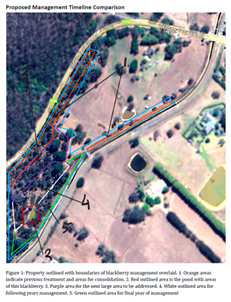
The new owners didn’t know where to start managing the overgrown blackberries! Property mapping showed the blackberry infestation areas, topography, native plants and natural water courses. Action areas were prioritised for the property owner to tackle as they can afford the time and investment (likely 3 years). Planning also considered a range of recommended techniques for each area and time in each subsequent year to regularly maintain treated areas, so the blackberries don’t take over again.Blackberries Store Energy
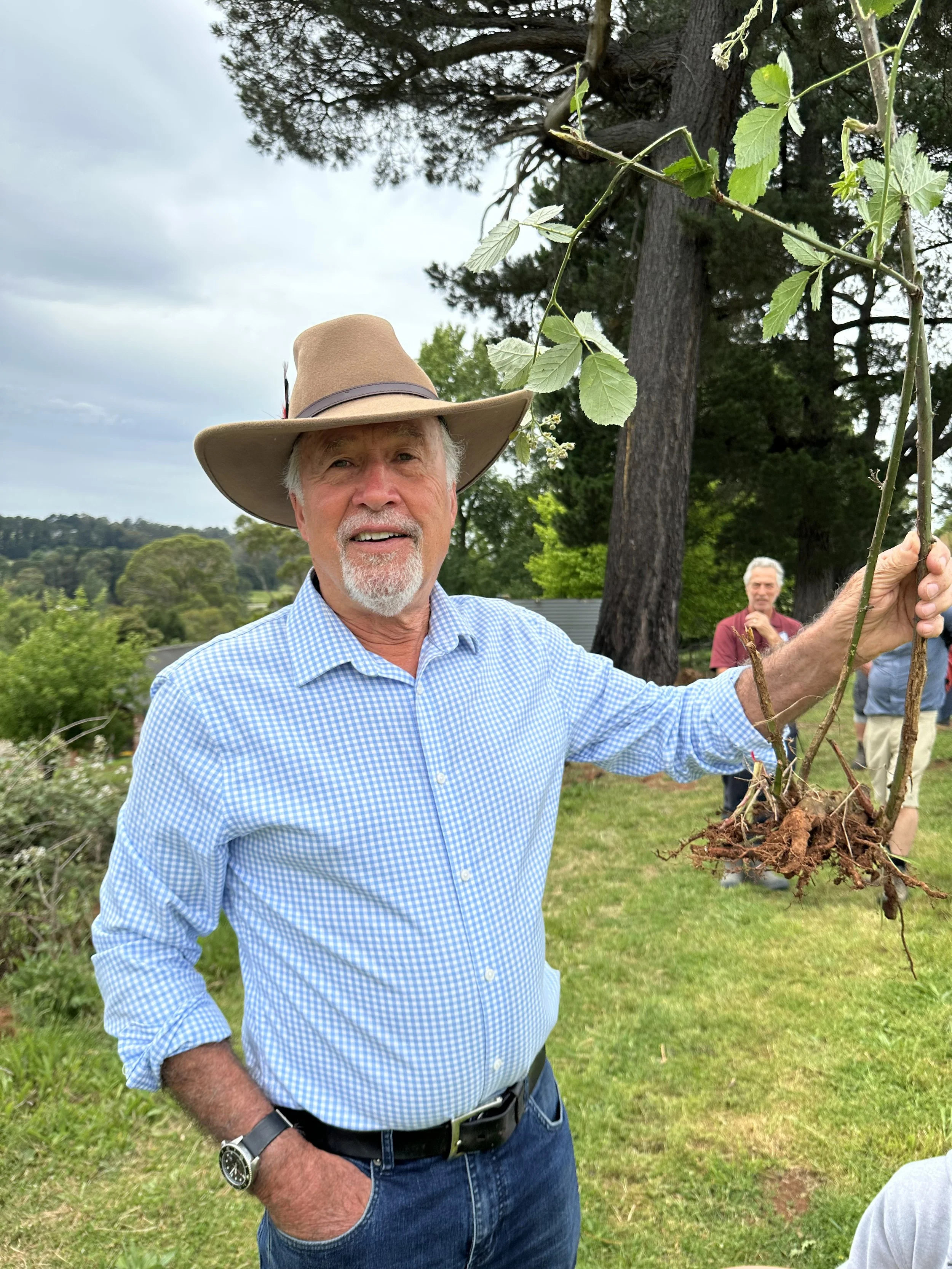
Robin explained how the leaves are the energy input for a blackberry. When removed, it reduces the energy available to the plant. Blackberries store energy in their “crown” at the base of the plant, which can re-shoot after the leaves and canes are destroyed. All of the following techniques can be used in an integrated way to manage blackberries, and in most cases, a second or third attempt will be required to eventually kill the blackberry plant. Mulching - mechanical large scale
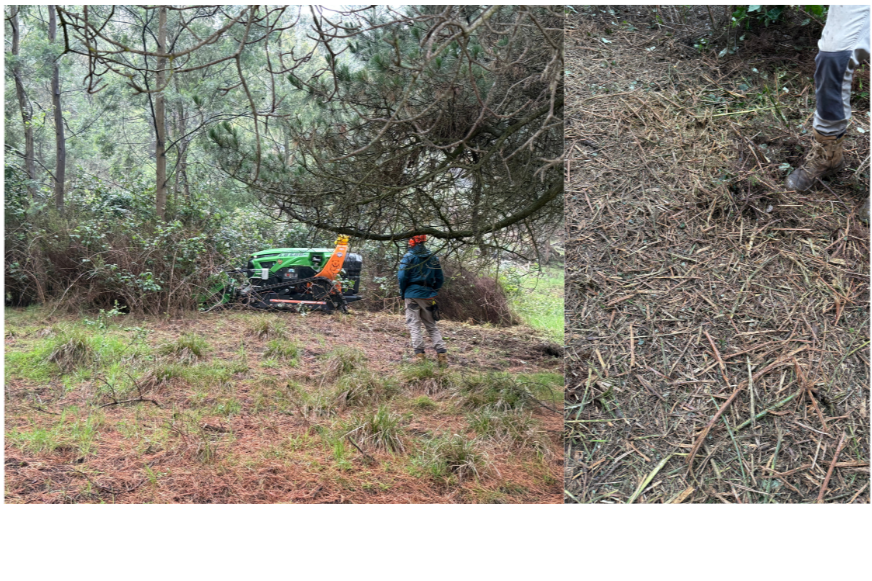
This remote-controlled mulcher tackled some mature blackberries that were taller than people! The heavy, strong and low-profile mulcher fearlessly chopped up the canes (and anything else in there) leaving a thick bed of mulch, that will in turn slow down the growth of new blackberry shoots. This machine can operate on steep terrain with no risk to the operator. Regrowth management in these areas will be much simpler!Mulching - Mechanical small scale
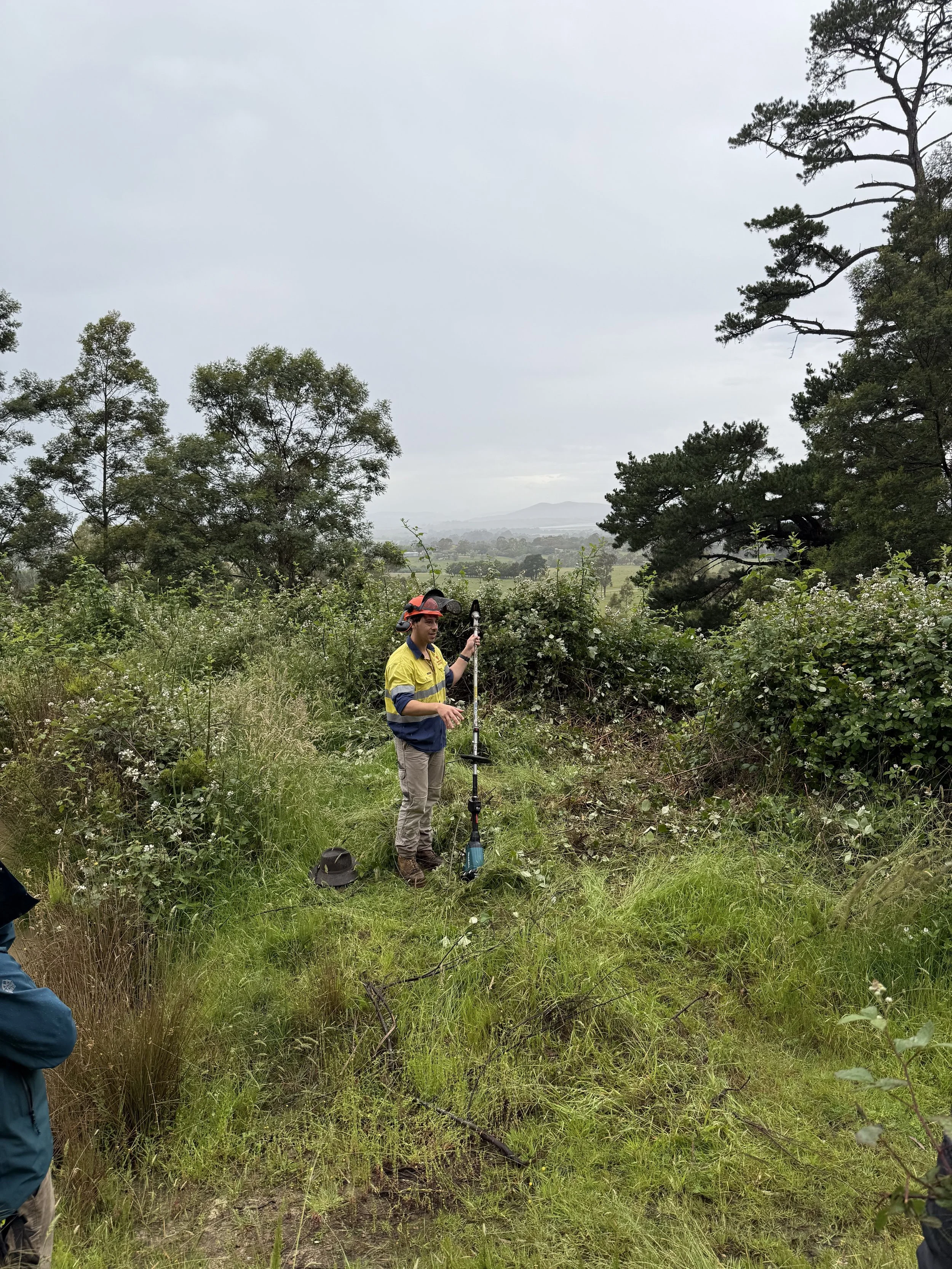
Where the large machines couldn’t reach, a whipper snipper was demonstrated to remove eth vegetation load. Dion used a blade to cut through the blackberry canes and demonstrated an up/down technique which prevents cut canes whipping around onto the operator. Here, herbicides needed to be kept to a minimum, so a knapsack will be used to spot spray regrowth and it may require repeat attempts over time before the area is revegetated with native plants. Mulching – grazing teams
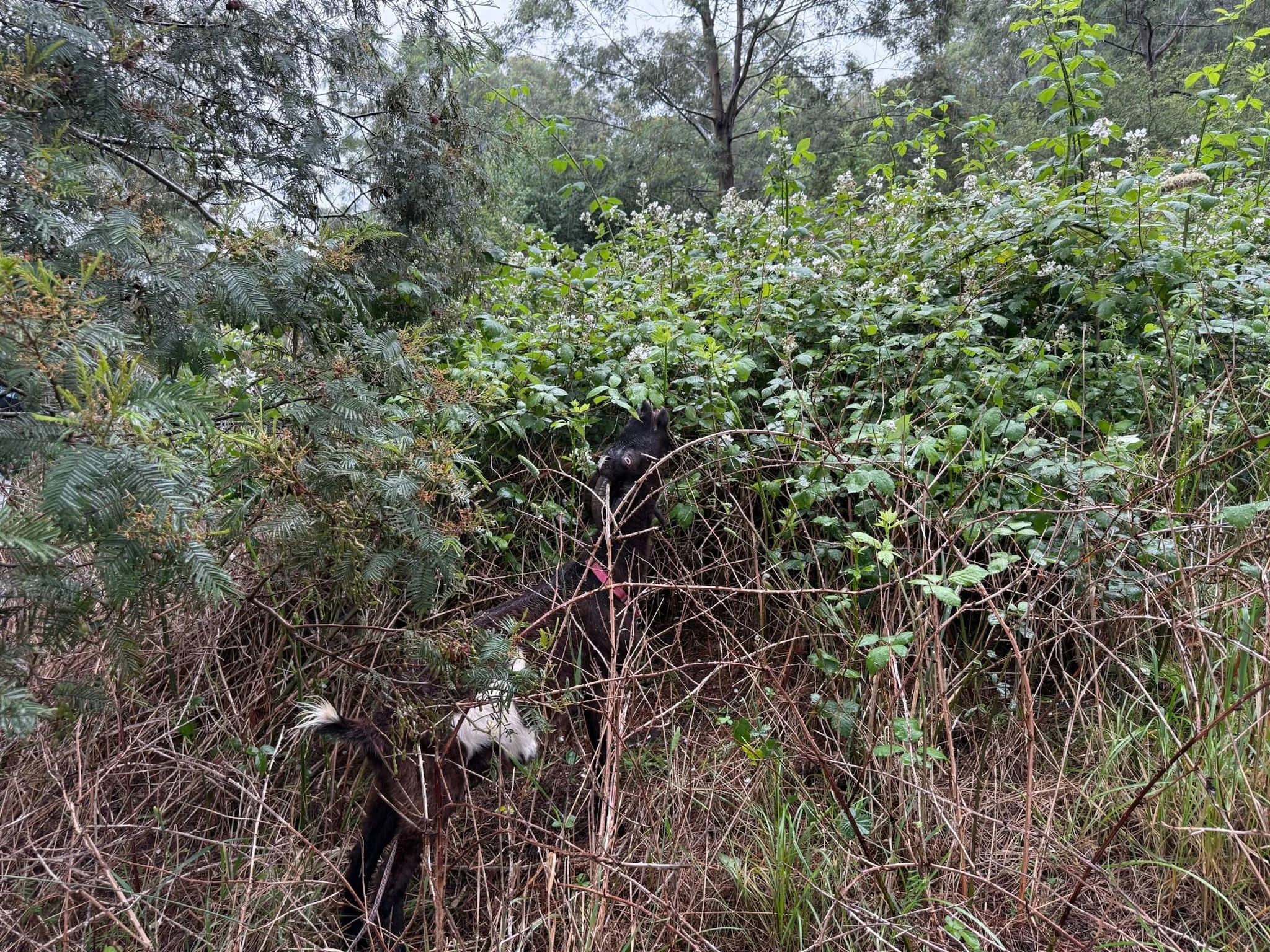
Intensively grazing goats on blackberry leaves is a more passive vegetation management technique. This team of goats was assigned to eat a patch of blackberries fenced off with electric wire. Goats are best when working in teams, are well supervised and can be protected. The blackberry canes are weakened over time, making the regrowth less vigorous and more easily managed in years 2 & 3.Sensitive areas – around waterways
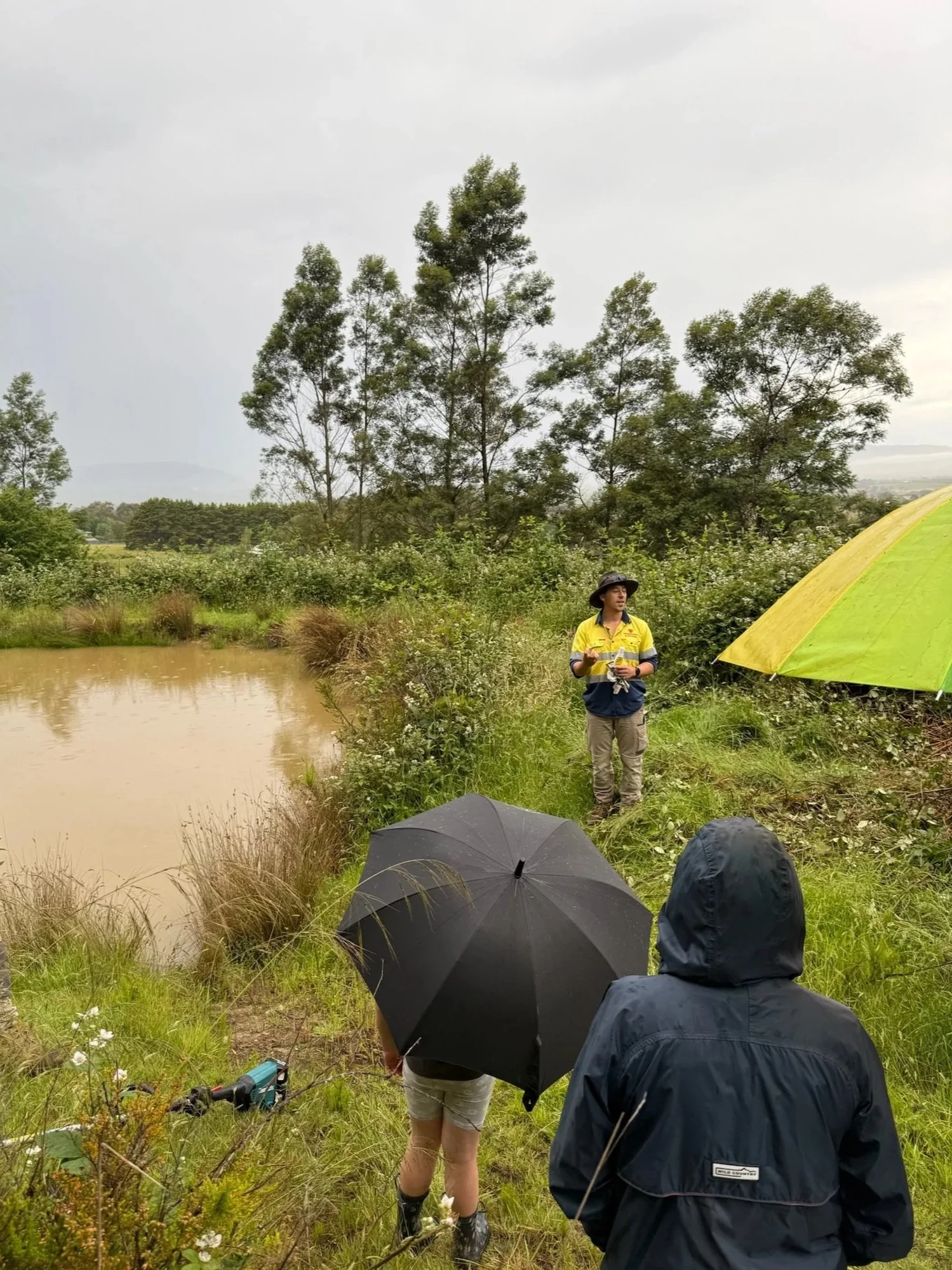
Native flora and fauna rely on clean fresh water. Blackberries growing near to this dam needed professional advice to ensure the right (water safe) herbicides are used at the right time, and the right vegetation management techniques are applied (leaves kept out of the water). Here, the labour intensive “cut and paint” technique was suggested to minimise herbicide use near to the water.Herbicides - safety & correct application
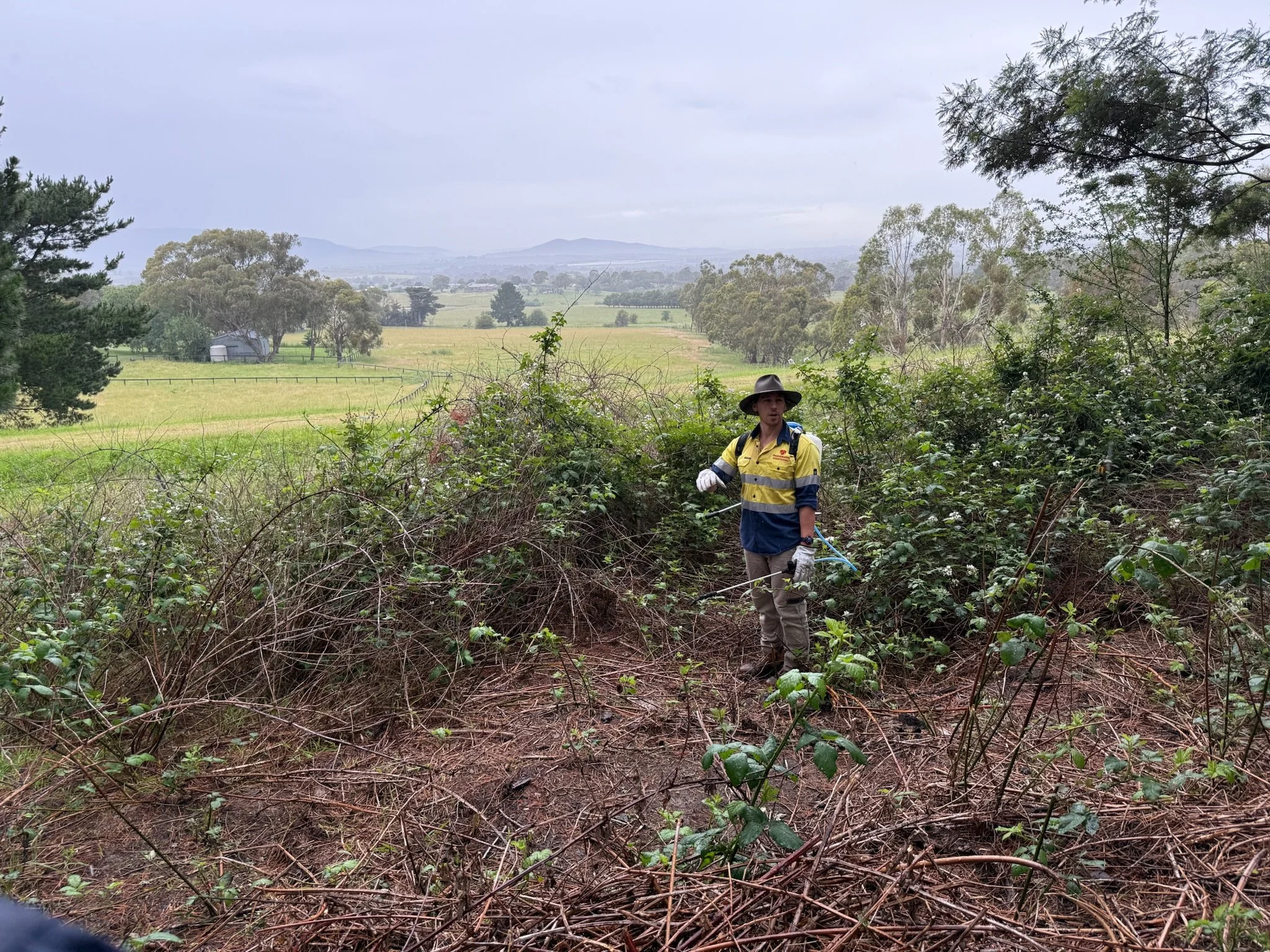
The right herbicide, at the right time, using the right amount, with the right tools and the right techniques is the way to incorporate herbicide into a blackberry management plan. Check the product label, VBT website or the Blackberry Control Manual for the correct herbicide selection, application techniques and personal safety. Some blackberry herbicides when used in certain weather conditions can travel in the air and affect sensitive crops like grapevines. Be responsible.Excavation - remove the roots
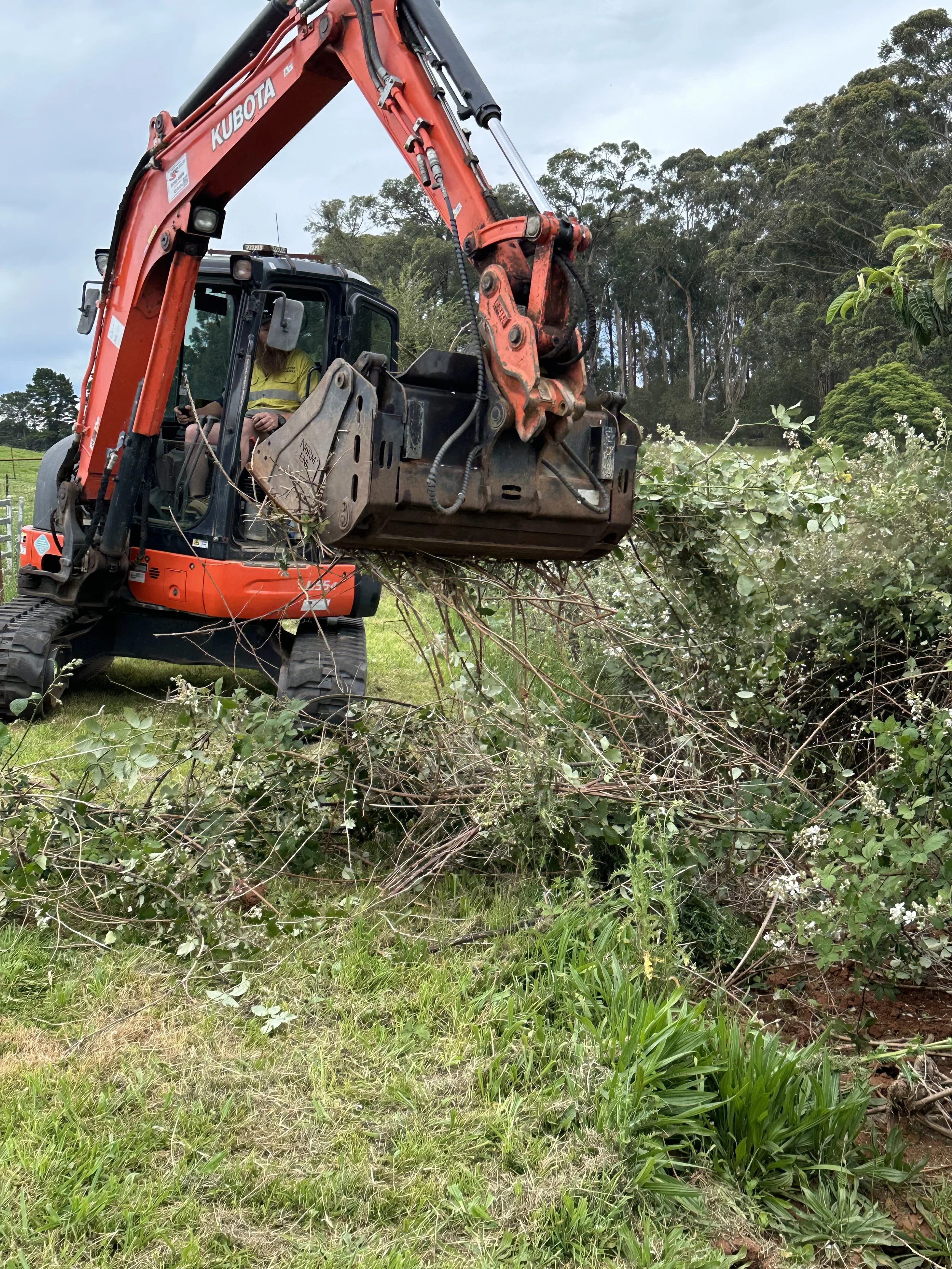
An excavator with a claw was used on this hilly embankment. The claw was able to push through the prickly canes and grab each plant at the base, removing the crown and most of the roots. Crowns and canes were collected in a pile for the goats to eat (alternatively mulched or burned). The bare embankment was sown with grass seed to stabilise the soil. Blackberry regrowth will be spot sprayed in year 2 and resown in year 3. Regrowth Management
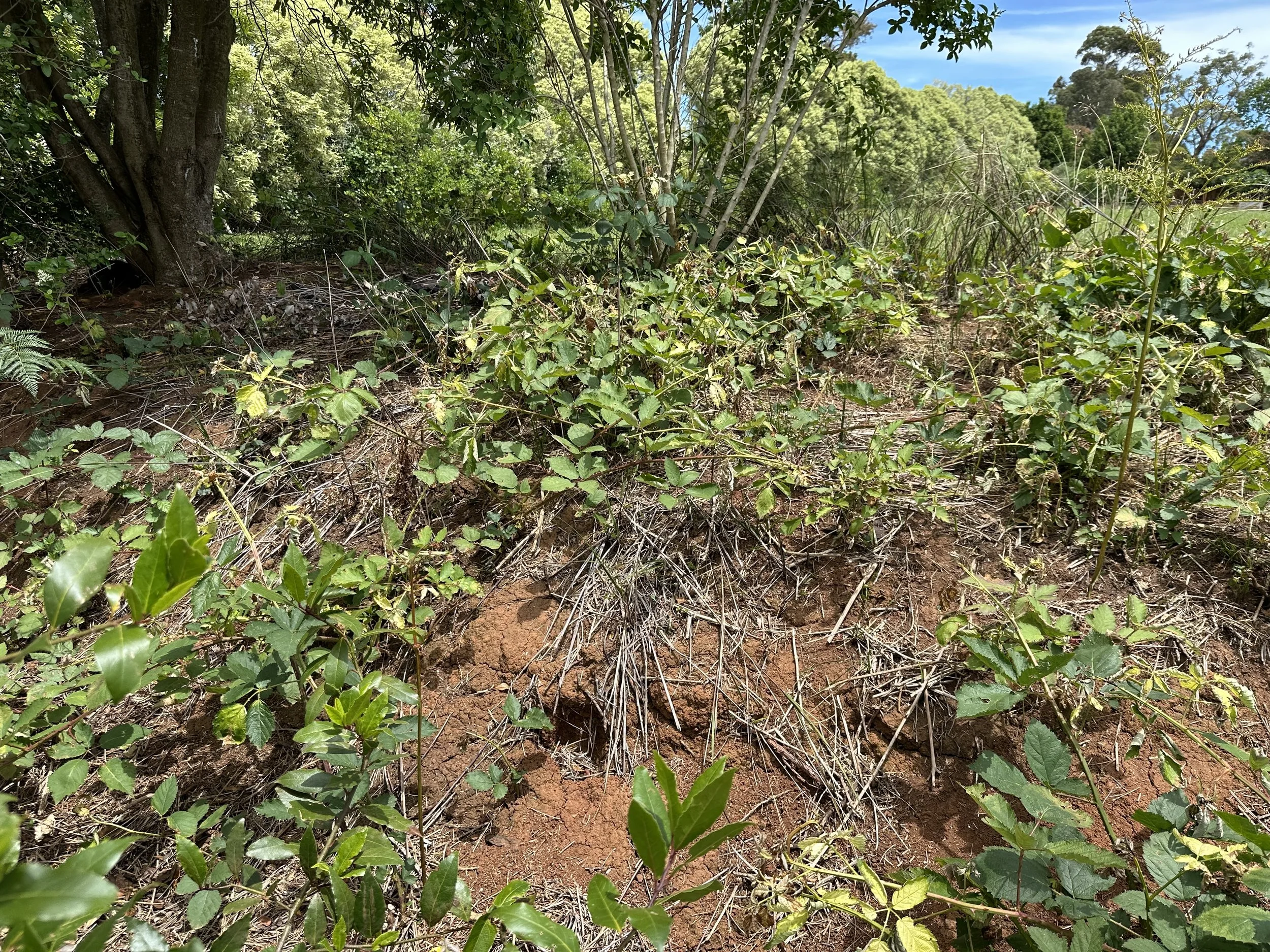
As blackberries re-shoot it is important to re-treat an area so they don’t get large and unmanageable again. This area was excavated last year, and the regrowth has been sprayed whilst small. It’s still too early to revegetate this area with desirable plants. It will require more management. Better timing of herbicide and better application techniques may possibly have improved the level of control here, but often weather limits the best results.